
We may earn money or products from the companies mentioned in this post.
Clean, better-tasting drinking water does not necessarily require an expensive filtration system. For many homes, an affordable under-sink water filtration system provides a practical middle ground between basic pitcher filters and more expensive reverse osmosis systems.
Installed beneath the kitchen sink, these systems can reduce common water-quality concerns such as sediment, chlorine taste and odor, and—depending on the specific filter—certain additional contaminants. They also provide filtered water on demand without taking up countertop or refrigerator space.
In this guide, we’ll look at what to consider before buying an under-sink filter and several budget-friendly options worth comparing. If you’re still deciding which type of filtration is right for your home, start with our guide to the best water filters for home.
Benefits of Under-Sink Water Filtration Systems
Under-sink water filters sit discreetly beneath your kitchen sink and treat water before it reaches either your existing faucet or a dedicated filtered-water faucet, depending on the system.
One of their biggest advantages is convenience. Unlike countertop filters, they do not occupy valuable workspace. Compared with pitcher filters, there is no reservoir to refill or wait for before you can pour another glass.
Under-sink systems also come in several levels of filtration. Basic carbon systems primarily target sediment, chlorine, taste, and odor, while more advanced systems may be certified for additional contaminant reductions.
For households that want even more comprehensive treatment, reverse osmosis is another option. Traditional RO systems use a membrane and usually a storage tank, while newer tankless systems can provide substantially higher flow. Our Waterdrop G3 P800 review covers one example of a high-output tankless reverse osmosis system.
Under-sink filtration can also reduce dependence on single-use bottled water while providing convenient filtered water for drinking, cooking, coffee, and filling reusable bottles.
What to Look for in an Affordable Under-Sink Water Filtration System
Price matters, but it should not be the only factor when comparing systems. Start by identifying what you actually want the filter to reduce.
Filtration Capabilities
Different filters address different contaminants. A basic carbon system may be appropriate if your main concerns are chlorine taste, odor, and sediment. If you’re concerned about lead, PFAS, VOCs, or another specific contaminant, look for performance data or third-party certification that specifically covers that reduction claim.
Do not assume that every under-sink filter removes the same substances. Your local water-quality report or a water test can help determine what type of filtration makes the most sense.
Certifications
Look for certifications or testing against applicable NSF/ANSI standards. Certification is more useful than broad marketing language because it identifies specific performance or material-safety standards a product has been evaluated against.
Filter Life and Replacement Cost
A low purchase price can become less attractive if replacement cartridges are expensive or need frequent replacement. Compare the manufacturer’s recommended replacement intervals and current replacement-filter costs before buying.
Flow Rate
Flow rate affects how quickly you can fill glasses, pots, coffee makers, and reusable bottles. Higher-flow systems can be particularly useful in busy kitchens.
Installation
Some filters connect directly to the cold-water line and existing faucet, while others require a separate filtered-water faucet. Check the installation requirements and measure the available space under your sink before ordering.
If you’re specifically considering reverse osmosis, our APEC ROES-50 vs iSpring RCC7AK comparison shows how two traditional tank-style RO systems differ in filtration stages, output, remineralization, and installation requirements.
Affordable Under-Sink Water Filtration Systems to Consider
The following systems represent several different approaches to budget-friendly under-sink filtration. Always verify current specifications, certification claims, replacement-filter availability, and pricing before purchasing.
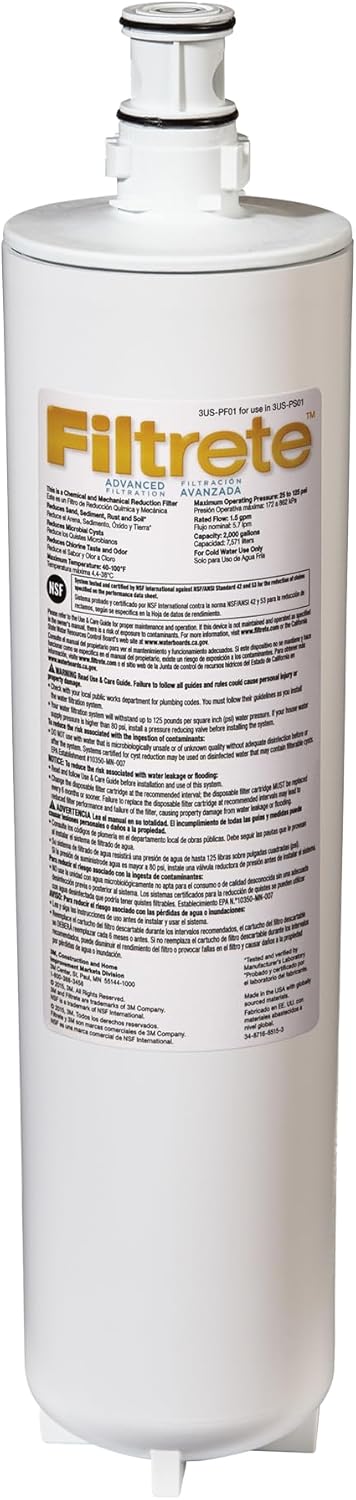
Filtrete Advanced Under Sink Quick Change
The Filtrete Advanced Under Sink Quick Change is designed for households that want straightforward filtration without a complicated installation or bulky multi-stage system.
Its compact design makes it worth considering where cabinet space is limited. As with any model, check the certification and performance information for the exact replacement cartridge you plan to use, because contaminant-reduction capabilities can vary by filter.
Best for: Simple, compact under-sink filtration and easy cartridge changes.
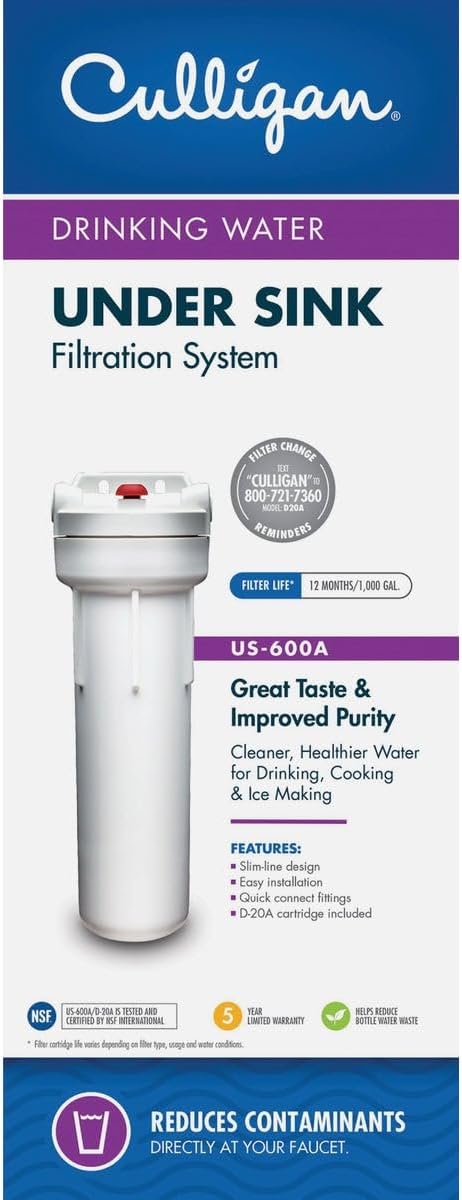
Culligan US-600A
The Culligan US-600A is a straightforward under-sink filtration option aimed at basic water-quality improvements. It can be a reasonable choice when the primary goals are addressing sediment and improving chlorine-related taste and odor rather than installing a more complex multi-stage or reverse osmosis system.
Before purchasing, compare the exact cartridge you intend to use with your water-quality concerns because the system’s performance depends on the installed filter.
Best for: Basic filtration needs and buyers prioritizing simplicity.
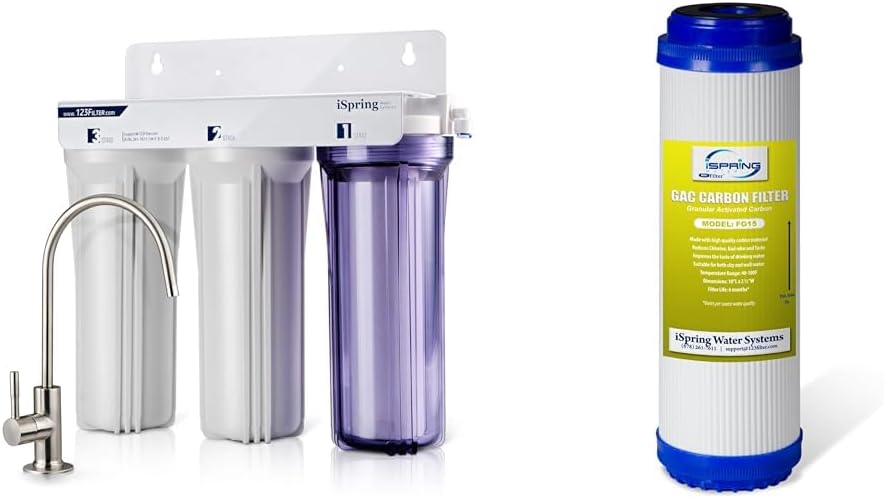
iSpring US31 Classic 3-Stage
The iSpring US31 takes a multi-stage approach with sediment, granular activated carbon, and carbon-block filtration. According to iSpring, the system is designed to reduce sediment, chlorine-related taste and odor, and other substances while retaining dissolved minerals rather than lowering TDS like a reverse osmosis membrane.
iSpring currently lists flow of up to 1 gallon per minute depending on source-water pressure. The separate housings also allow each filtration stage to be replaced as needed.
Best for: Buyers who want multi-stage filtration without moving to reverse osmosis.
Other Under-Sink Filters Worth Considering
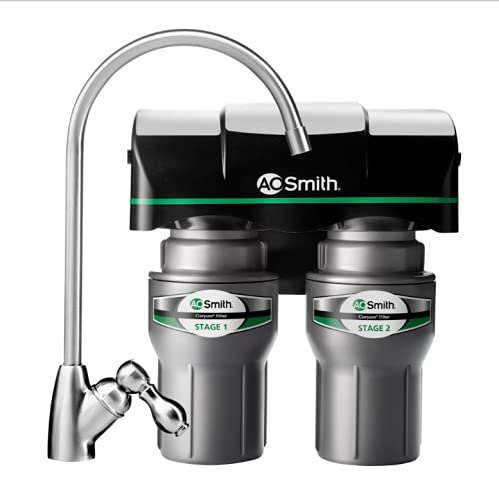
AO Smith AO-US-200
The AO Smith AO-US-200 is a more advanced two-stage option. The manufacturer lists the system as WQA certified to NSF/ANSI Standards 42, 53, and 401, with certified reductions covering a range of contaminants and aesthetic water-quality concerns.
AO Smith specifies a 500-gallon capacity, approximately six-month filter life, and a rated flow of 0.5 gallons per minute. It also includes a dedicated filtered-water faucet.
Best for: Buyers who place a high priority on third-party-certified contaminant reduction.
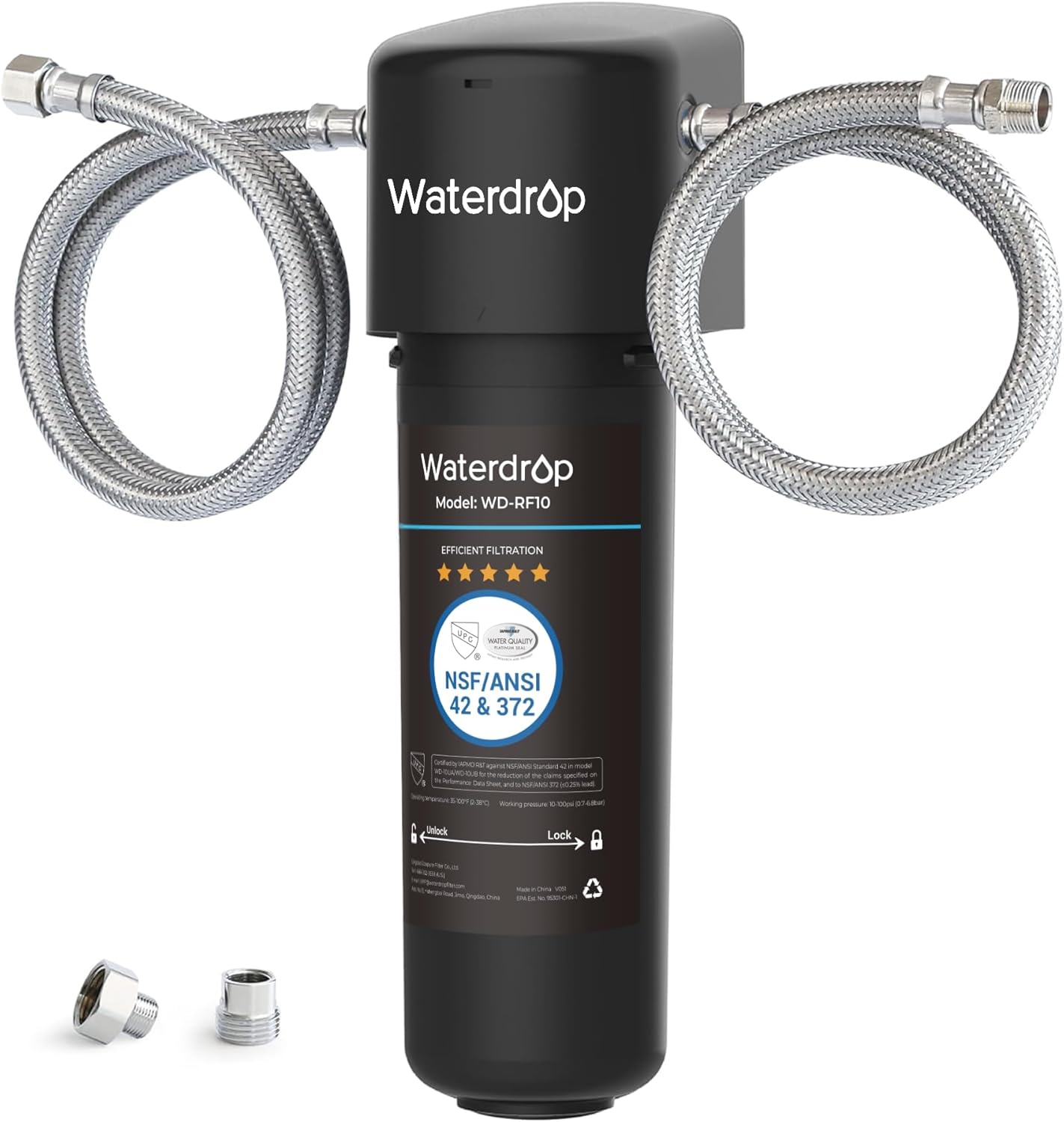
Waterdrop Under-Sink Filter
Waterdrop offers compact direct-connect under-sink filters aimed at households that want simple filtration without a storage tank or separate reverse osmosis membrane. These systems can be appealing where cabinet space and straightforward installation are priorities.
Waterdrop sells several similarly named under-sink models with different capacities and filtration claims, so verify the exact model associated with the current product listing before purchasing.
Best for: Compact direct-connect filtration and simple everyday use.
Under-Sink Filter or Reverse Osmosis?
A conventional under-sink carbon filter and an under-sink reverse osmosis system are not interchangeable.
Carbon-based systems generally provide faster flow, simpler installation, no wastewater, and lower maintenance complexity. Reverse osmosis systems use a semipermeable membrane and can address dissolved substances that ordinary carbon filtration is not designed to remove.
The tradeoff is that traditional RO systems generally require more cabinet space and produce wastewater, while some high-output tankless RO systems require electricity.
If you’re deciding among several filtration technologies rather than just individual products, see our complete home water filter guide.
Final Thoughts
An affordable under-sink water filtration system can be one of the easiest ways to improve everyday drinking and cooking water without taking up countertop or refrigerator space.
The right choice depends less on finding the cheapest filter and more on matching the system to your actual water-quality concerns. Check what the system is designed and certified to reduce, consider replacement-filter costs, measure your cabinet space, and decide whether you want simple carbon filtration or the broader treatment capabilities of reverse osmosis.
For straightforward filtration, systems such as the Filtrete, Culligan, iSpring, AO Smith, and Waterdrop models above provide several different approaches. For buyers who need more comprehensive treatment, comparing these options with a certified reverse osmosis system is the logical next step.