
We may earn money or products from the companies mentioned in this post.
Filtered water bottles offer a convenient way to improve the taste and quality of drinking water without relying on single-use plastic bottles. Whether you’re commuting to work, traveling, heading to the gym, or spending time outdoors, a bottle with built-in filtration can make it easier to drink filtered water wherever you go.
Not all filtered bottles provide the same level of treatment, however. Some are primarily designed to reduce chlorine taste and odor from treated tap water, while more advanced purifiers are intended for travel and outdoor situations where microorganisms and other contaminants may be a concern.
Below, we’ll compare five popular options and explain what to look for when choosing the best filtered water bottle for your needs.
Best Filtered Water Bottles: Our Top Picks
1. Brita Stainless Steel Water Filter Bottle
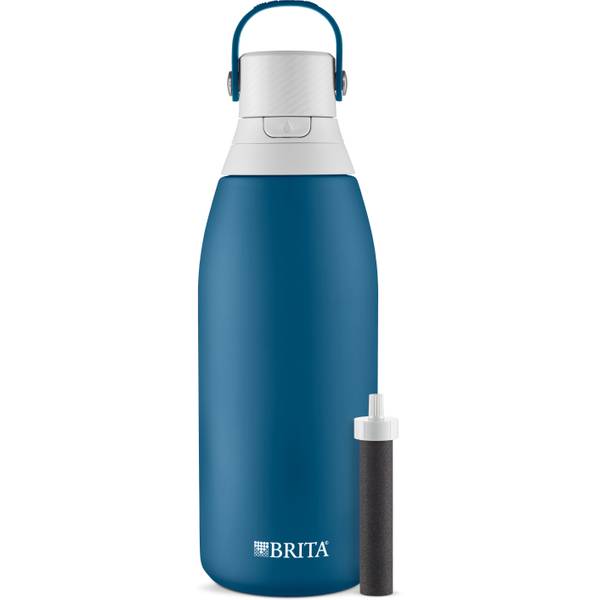
The Brita Stainless Steel Water Filter Bottle is a practical choice for everyday use when your primary goal is improving the taste of municipal tap water.
Brita’s bottle filtration system is designed primarily to reduce chlorine taste and odor and certain particulates as you drink. This makes it better suited to already-treated drinking water than questionable outdoor water sources.
The insulated stainless steel construction is another advantage for commuters, office workers, gym users, and anyone who prefers to keep water cold throughout the day.
Brita recommends replacing its bottle filter according to the manufacturer’s specified capacity and replacement schedule. Actual filter life can vary depending on use and water conditions.
Best for: Everyday filtered tap water and commuters.
2. Brita Premium 26-Ounce Filtering Water Bottle
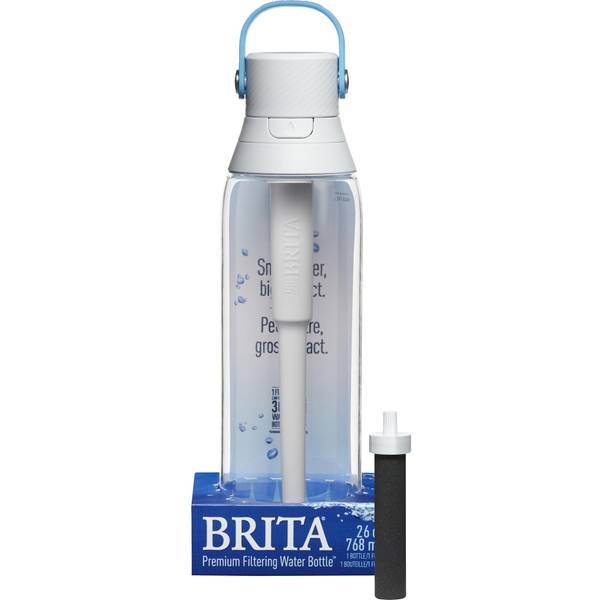
The Brita Premium 26-Ounce Filtering Water Bottle offers similar everyday filtration in a lighter plastic design.
Like the stainless steel version, its filtration is intended primarily to improve treated tap water rather than purify untreated water from lakes, streams, or other questionable sources.
The larger capacity and lightweight construction can make it convenient for work, school, the gym, and everyday errands. Because it isn’t insulated like the stainless steel model, however, it may not keep water cold as long.
Best for: Budget-conscious everyday use.
3. Philips Insulated Stainless Steel Filtered Water Bottle
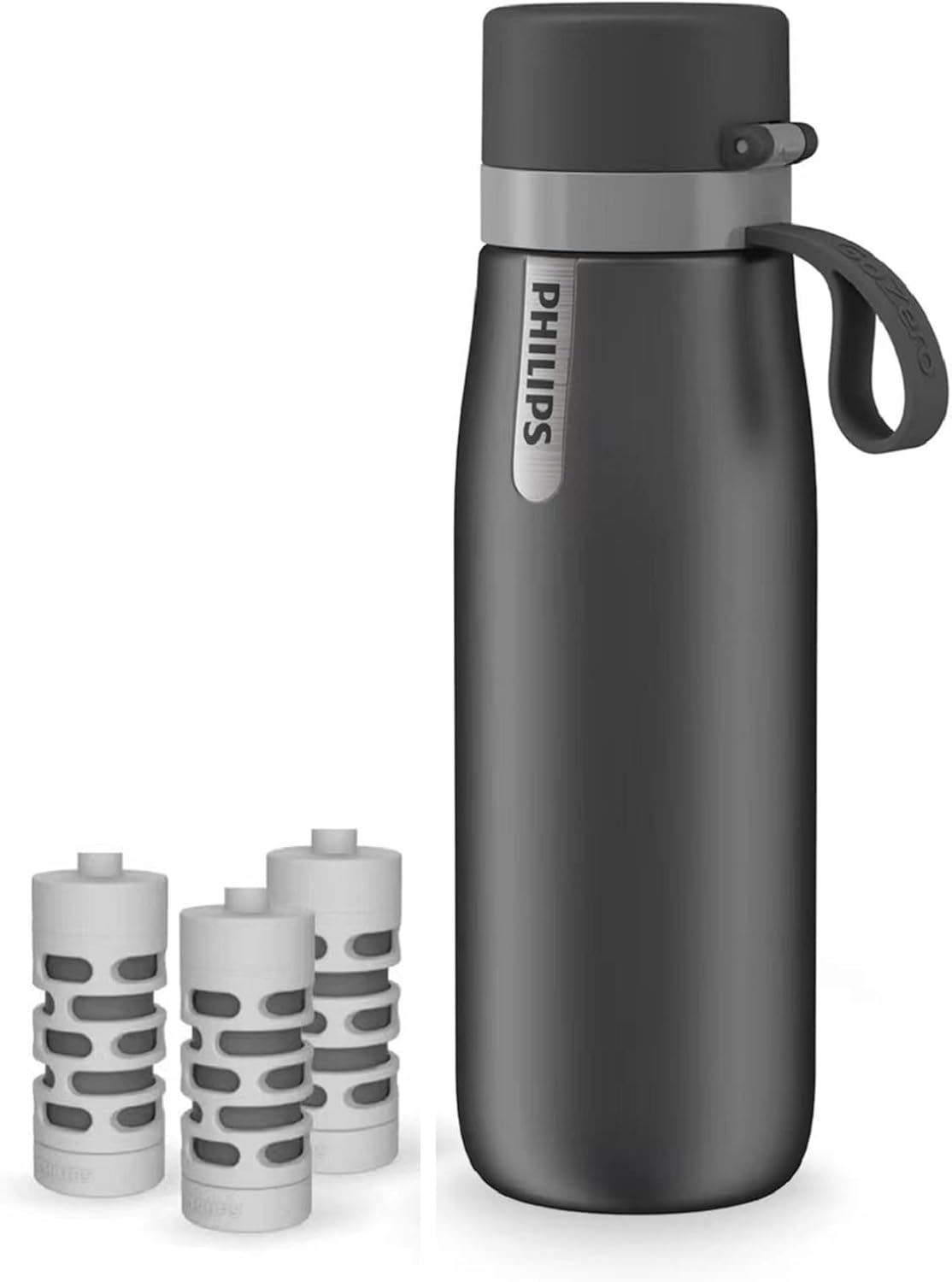
The Philips Insulated Stainless Steel Filtered Water Bottle combines portable filtration with an insulated bottle design.
Its activated-carbon-based filtration is intended to improve characteristics such as chlorine-related taste and odor in treated drinking water. As with any filtered bottle, buyers should check the current manufacturer’s specifications and independent certifications for the exact model before relying on specific contaminant-reduction claims.
The compact stainless steel construction can be appealing if you want something durable that fits comfortably into a daily routine.
Best for: Compact everyday use with insulation.
4. GRAYL GeoPress Water Purifier
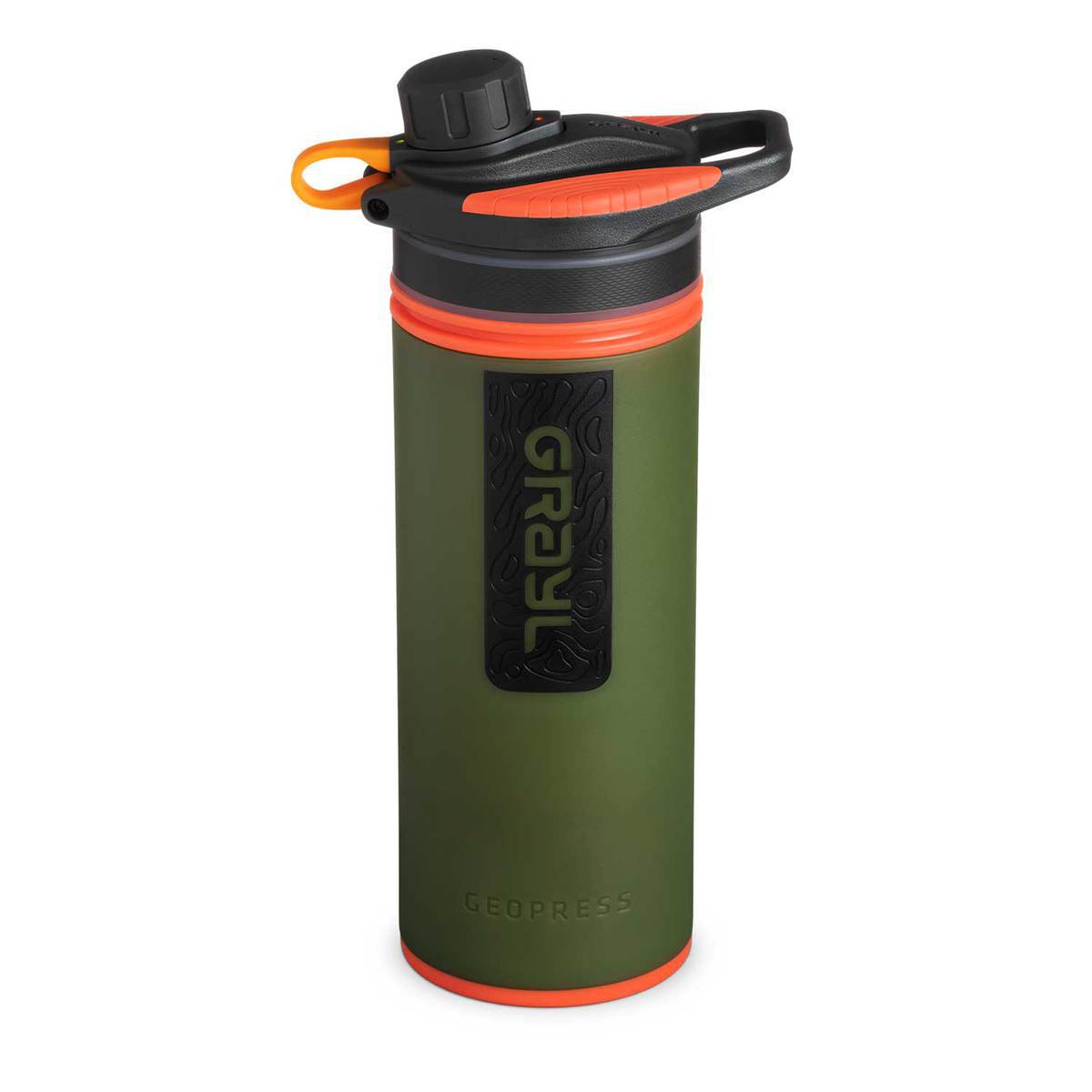
The GRAYL GeoPress belongs in a different category from basic filtered water bottles.
Rather than simply improving the taste of treated tap water, the GeoPress is designed as a portable water purifier for travelers, campers, hikers, and emergency preparedness.
Its replaceable purifier cartridge is designed to address microorganisms as well as certain chemicals, particulates, and other contaminants according to GRAYL’s product specifications.
The system works by filling the outer container and pressing the purifier through the water. This approach provides more extensive treatment than a typical carbon-filtered drinking bottle, but it also makes the GeoPress larger and generally more expensive than an everyday bottle.
Because cartridge capacity and performance specifications can change between product versions, check the current manufacturer’s specifications before purchasing replacement cartridges or relying on a specific treatment claim.
Best for: International travel, camping, hiking, and emergency preparedness.
5. Epic Water Filters Bottle System
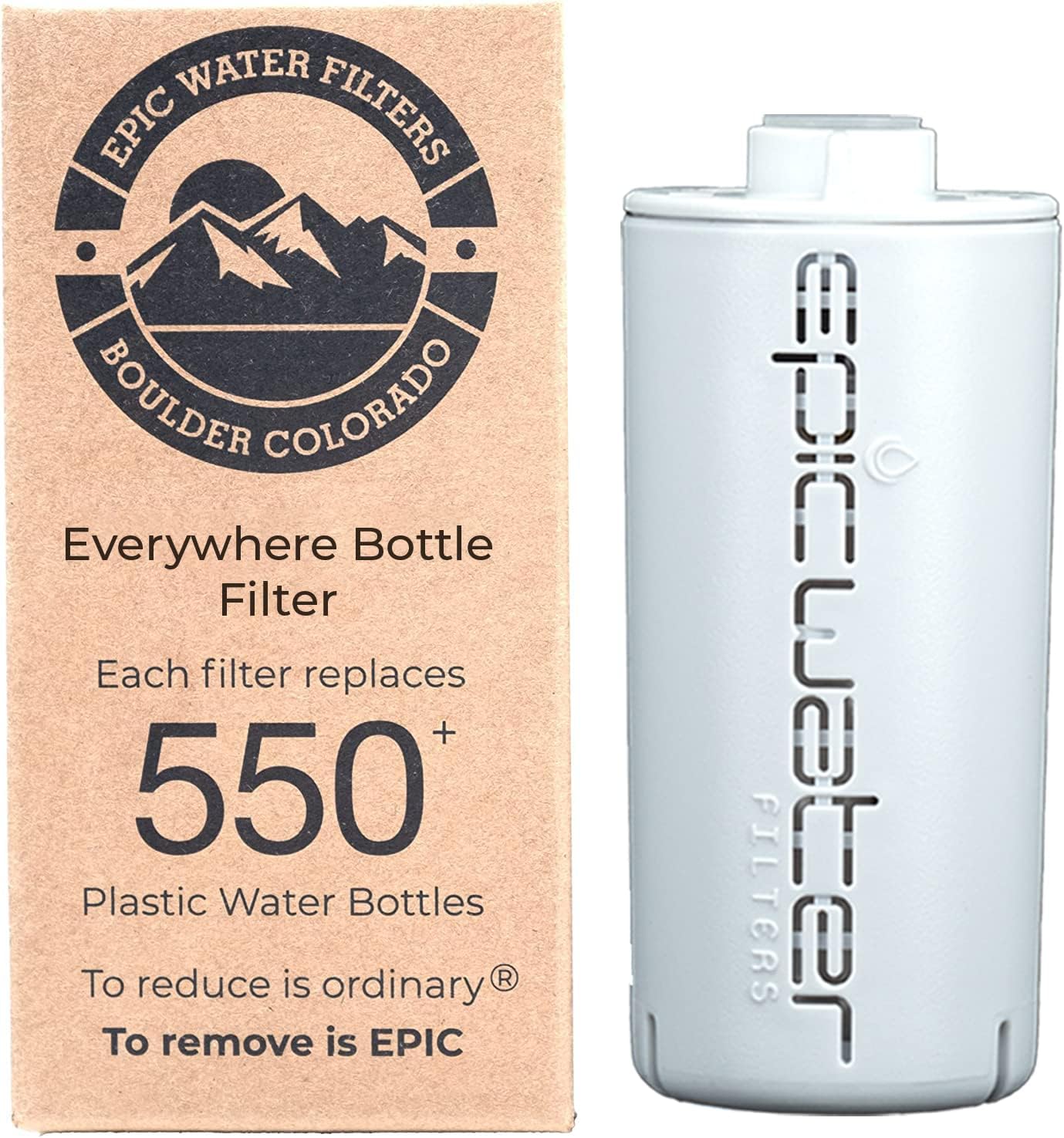
Epic Water Filters offers portable bottle filtration options designed for people who want more extensive filtration than a basic taste-and-odor bottle filter.
Depending on the particular filter and bottle configuration, Epic advertises reduction of various contaminants. Because performance claims differ between cartridges and product versions, verify the specifications and testing for the exact filter you’re considering.
This can be a useful option for people who want portable filtration but don’t necessarily need the outdoor purification capabilities of a product such as the GRAYL GeoPress.
Best for: Everyday users looking for broader portable filtration.
Filtered Water Bottle vs. Water Purifier Bottle
One of the most important distinctions when shopping for filtered water bottles is the difference between filtration and purification.
Basic bottle filters commonly use activated carbon or similar media to improve the taste and odor of already-treated tap water. They should not automatically be assumed to make microbiologically unsafe water safe to drink.
Portable water purifiers are designed for more demanding situations and may be tested for reduction or removal of microorganisms such as bacteria, protozoa, and viruses.
Always check the manufacturer’s specific performance claims and testing before using any portable filtration product with untreated water.
How to Choose the Best Filtered Water Bottle
1. Decide Where You’ll Use It
Start with your water source.
If you primarily fill your bottle from treated municipal taps, a basic carbon-filter bottle may be sufficient for improving taste and odor.
If you’re traveling internationally, camping, hiking, or preparing for emergencies, you may need a purifier designed and tested for more challenging water sources.
2. Check the Contaminant-Reduction Claims
A long list of filtration stages doesn’t necessarily mean better filtration.
Instead, determine which contaminants the manufacturer specifically claims the product reduces and whether those claims are supported by independent certification or testing.
If you’re selecting filtration equipment for your home as well, our guide to choosing the best water filter for your home explains how different treatment technologies compare.
3. Look for Independent Certification
Certifications can make it easier to evaluate filtration claims because they provide a defined performance standard rather than relying solely on marketing language.
Different NSF/ANSI standards apply to different treatment technologies and contaminant-reduction claims, so don’t assume that simply seeing “NSF” means a product removes every contaminant.
4. Consider Filter Replacement Costs
The purchase price of the bottle is only part of the long-term cost.
Check:
- Replacement cartridge price
- Rated cartridge capacity
- Replacement availability
- Recommended replacement interval
- Whether cartridges are proprietary
A cheaper bottle can become expensive if its filters require frequent replacement.
5. Choose the Right Capacity
A compact bottle is easier to carry, but it also requires more frequent refilling.
Think about where you’ll use it most often and whether you’ll have convenient access to refill water throughout the day.
6. Decide Whether Insulation Matters
Stainless steel insulated bottles can keep water cold longer, while plastic bottles are typically lighter and less expensive.
For commuting or long workdays, insulation may be worth the extra weight. For hiking or travel where every ounce matters, a lighter bottle may be preferable.
7. Consider Cleaning and Maintenance
A reusable bottle still needs regular cleaning.
Check whether the bottle, lid, straw, mouthpiece, and other components can be easily disassembled and cleaned according to the manufacturer’s instructions.
Replacing filtration cartridges on schedule is also important because filter performance does not remain constant indefinitely.
Are Filtered Water Bottles Worth It?
For many people, yes—but their value depends on what you’re expecting them to do.
A basic filtered bottle can be useful if you frequently drink municipal tap water but dislike its chlorine taste or odor. It can also reduce dependence on disposable bottled water.
However, a bottle filter isn’t necessarily a replacement for a more capable home filtration system.
If you want filtered drinking water throughout your kitchen, you may be better served by an under-sink water filtration system or a countertop water filtration system.
Can You Put Untreated Water in a Filtered Water Bottle?
Only if the particular product is specifically designed and tested for that use.
Ordinary carbon-filter bottles intended for municipal tap water should not automatically be used to treat water from lakes, rivers, streams, or other potentially contaminated sources.
If untreated water is part of your intended use, choose a product with appropriate microbial treatment capabilities and follow the manufacturer’s instructions carefully.
How Often Should You Replace a Water Bottle Filter?
There is no universal replacement interval for filtered water bottles.
Filter life depends on the cartridge design, water quality, volume filtered, and manufacturer’s specifications. Some manufacturers provide both a time-based recommendation and a maximum gallon capacity.
Follow the replacement instructions for your exact cartridge rather than assuming every bottle filter lasts the same amount of time.
Filtered Water Bottles vs. Disposable Bottled Water
A reusable filtered bottle can reduce the number of disposable bottles you purchase, particularly if your main concern is improving the taste of tap water.
It may also cost less over time depending on the bottle, replacement-filter price, and how much bottled water you would otherwise purchase.
However, remember that filtration capabilities vary. The convenience of a reusable bottle shouldn’t replace careful evaluation of the water source and the filter’s actual performance.
Frequently Asked Questions
Do filtered water bottles remove chlorine?
Many activated-carbon bottle filters are designed to reduce chlorine taste and odor, but performance varies by product. Check the manufacturer’s specifications for the exact bottle and cartridge.
Do filtered water bottles remove lead?
Some portable filters may have specific lead-reduction claims, while others do not. Do not assume every filtered bottle reduces lead simply because it contains activated carbon.
Do filtered water bottles remove bacteria?
Most basic drinking-water bottle filters should not automatically be assumed to remove bacteria. Portable purifier systems designed for outdoor or travel use may provide microbial treatment, depending on their design and testing.
Can filtered water bottles remove microplastics?
Some filters may reduce certain particles or microplastics, but performance depends on the filter design and pore size. Look for specific testing or certification rather than assuming all bottle filters provide the same reduction.
Can I use a filtered water bottle while traveling?
Yes, but choose the product according to the water source. A basic filter intended for treated tap water and a purifier intended for questionable water sources serve different purposes.
Final Thoughts
The best filtered water bottles aren’t necessarily the ones with the longest list of filtration claims. The right choice depends on where you’ll use the bottle and what you need the filter to accomplish.
For everyday municipal tap water, Brita’s filtered bottles provide a simple option focused primarily on improving taste and odor. If portability and insulation matter, a stainless steel bottle may make the most sense.
For travel, outdoor recreation, or emergency preparedness where water quality may be less predictable, a purpose-built purifier such as the GRAYL GeoPress offers a different level of treatment.
Whatever you choose, verify the current contaminant-reduction claims, certification or testing, replacement-filter cost, and cartridge lifespan before purchasing.
For more help comparing filtration technologies, read our complete guide to the best water filters for home.