

We may earn money or products from the companies mentioned in this post.
Looking for the best faucet water filter for your kitchen? Faucet-mounted filters offer one of the simplest ways to improve the taste and quality of drinking water without installing a larger under-sink system.
They attach directly to compatible kitchen faucets and allow you to switch between filtered and unfiltered water. That makes them convenient for drinking and cooking while preserving faster unfiltered flow for tasks such as washing dishes.
However, not every faucet filter reduces the same contaminants. The best choice depends on your water quality, the contaminants you want to reduce, faucet compatibility, replacement-filter costs, and verified performance claims.
In this guide, we’ll look at several popular faucet filtration systems and explain what to consider before choosing one.
Why Use a Faucet Water Filter?
Municipal drinking water in the United States is treated and regulated, but water quality can vary by location, source water, treatment system, and household plumbing.
A faucet filter can be useful when you want to reduce specific contaminants or improve chlorine-related taste and odor without installing a more complicated filtration system.
Depending on the particular filter and its certifications, faucet-mounted systems may reduce substances such as chlorine, lead, particulates, certain organic compounds, or other contaminants.
The important distinction is that you should never assume every faucet filter removes every contaminant. Always check the performance data for the exact model you are considering.
Faucet filters also should not automatically be treated as water purifiers. Many are intended for use with potable water and should not be used to make microbiologically unsafe water safe to drink.
Best Faucet Water Filter Options
The following systems represent several different approaches to faucet filtration. Rather than ranking them solely by online reviews, we’ve focused on filtration information, capacity, convenience, construction, and manufacturer specifications.
1. PUR PLUS Faucet Filtration System
Best for: Broad certified contaminant reduction
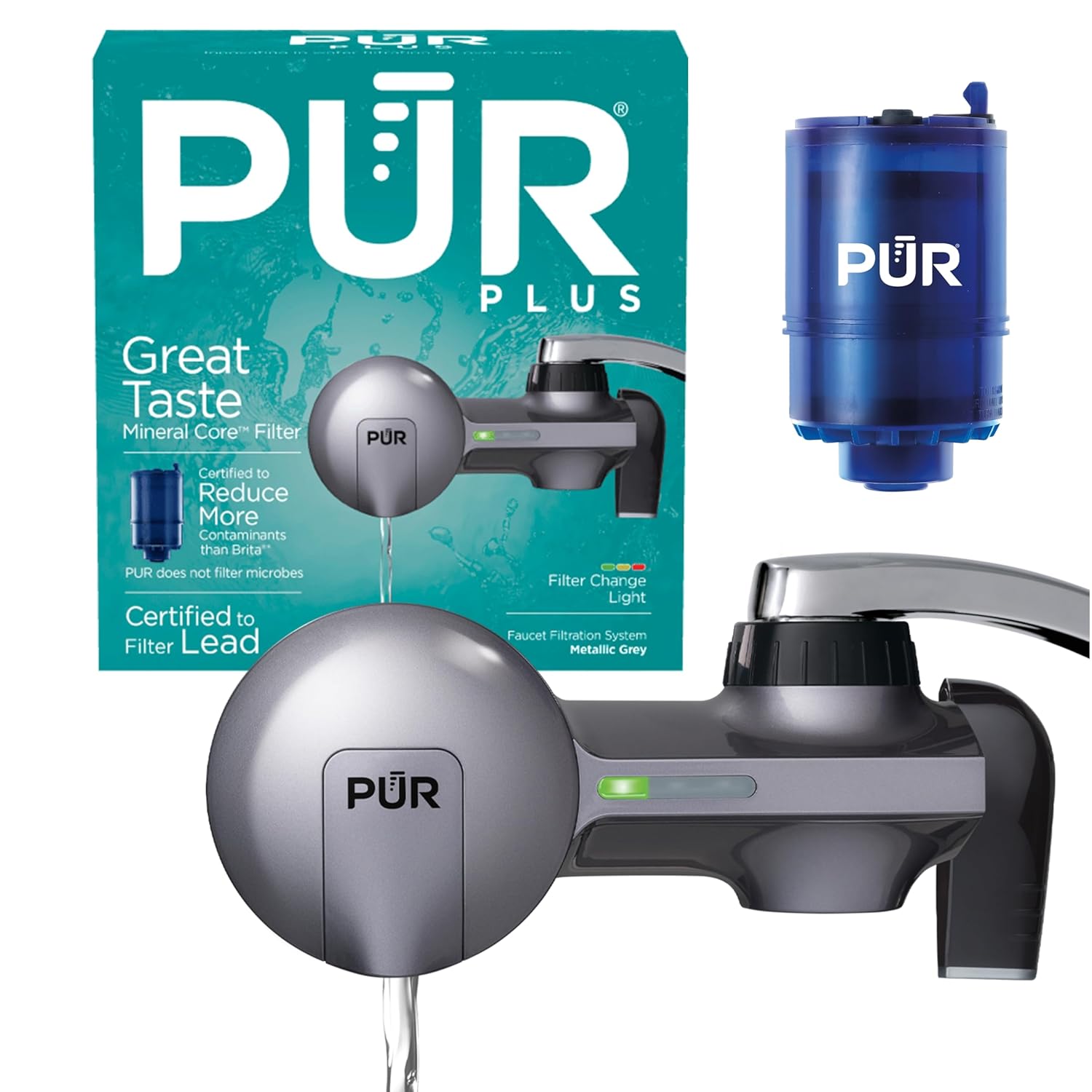
PUR is one of the most established names in faucet-mounted filtration. Its current faucet systems use PUR or PUR PLUS replacement filters and are designed to attach to most standard faucets without tools.
PUR states that its faucet filters are certified to reduce numerous chemical and physical contaminants, including lead. Its performance data lists testing under NSF/ANSI Standards 42, 53, and 401 for specified reduction claims.
Why Consider It?
- Certified performance: PUR publishes performance data identifying the substances its faucet filters are certified to reduce.
- Lead reduction: Lead is among the contaminants covered by PUR’s faucet-filter claims.
- Tool-free installation: Designed to fit most standard faucets and includes adapters.
- Replacement schedule: PUR recommends replacing its faucet filter approximately every three months for best performance.
- Filtered/unfiltered selection: You can use filtered water for drinking and cooking without filtering every gallon used at the sink.
Potential drawback: PUR notes that its faucet systems do not fit pull-out or handheld faucets, so check compatibility before buying.
Buy Now: Check the PUR faucet filtration system on Amazon
2. Brita Faucet Water Filter System
Best for: Simple maintenance and easy-to-find replacement filters
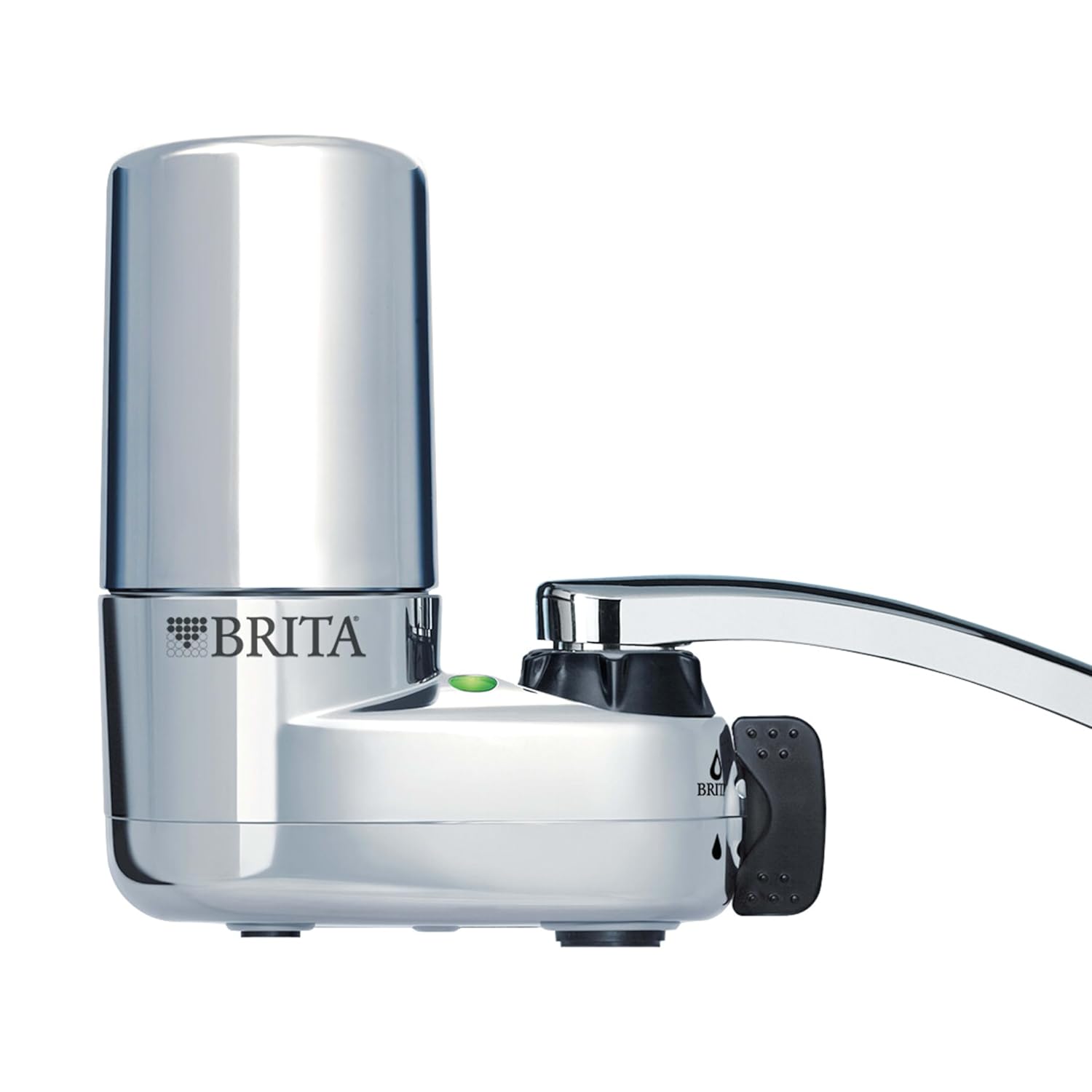
Brita’s faucet filtration systems provide another straightforward option for homeowners who want filtered drinking water directly from the kitchen faucet.
Brita states that its faucet filters reduce chlorine taste and odor along with specific contaminants identified in the system’s performance data. Current Brita faucet systems also include an electronic filter-change indicator.
Why Consider It?
- 100-gallon filter capacity: Brita specifies up to 100 gallons for its faucet replacement filters.
- Approximately four-month replacement interval: For an average household, Brita estimates about four months, although actual life depends on usage and water conditions.
- Filter indicator: The system provides a visual indication of when replacement is approaching.
- Lead reduction: Brita’s current faucet systems include certified lead-reduction claims.
- Easy installation: Designed for compatible standard faucets without complicated plumbing modifications.
Potential drawback: As with other faucet-mounted filters, compatibility should be checked before purchase, particularly if you have a nonstandard, pull-down, or specialty faucet.
Buy Now: View the Brita faucet water filter on Amazon
3. Waterdrop WD-FC-06 Faucet Water Filter
Best for: Stainless-steel construction and higher rated capacity
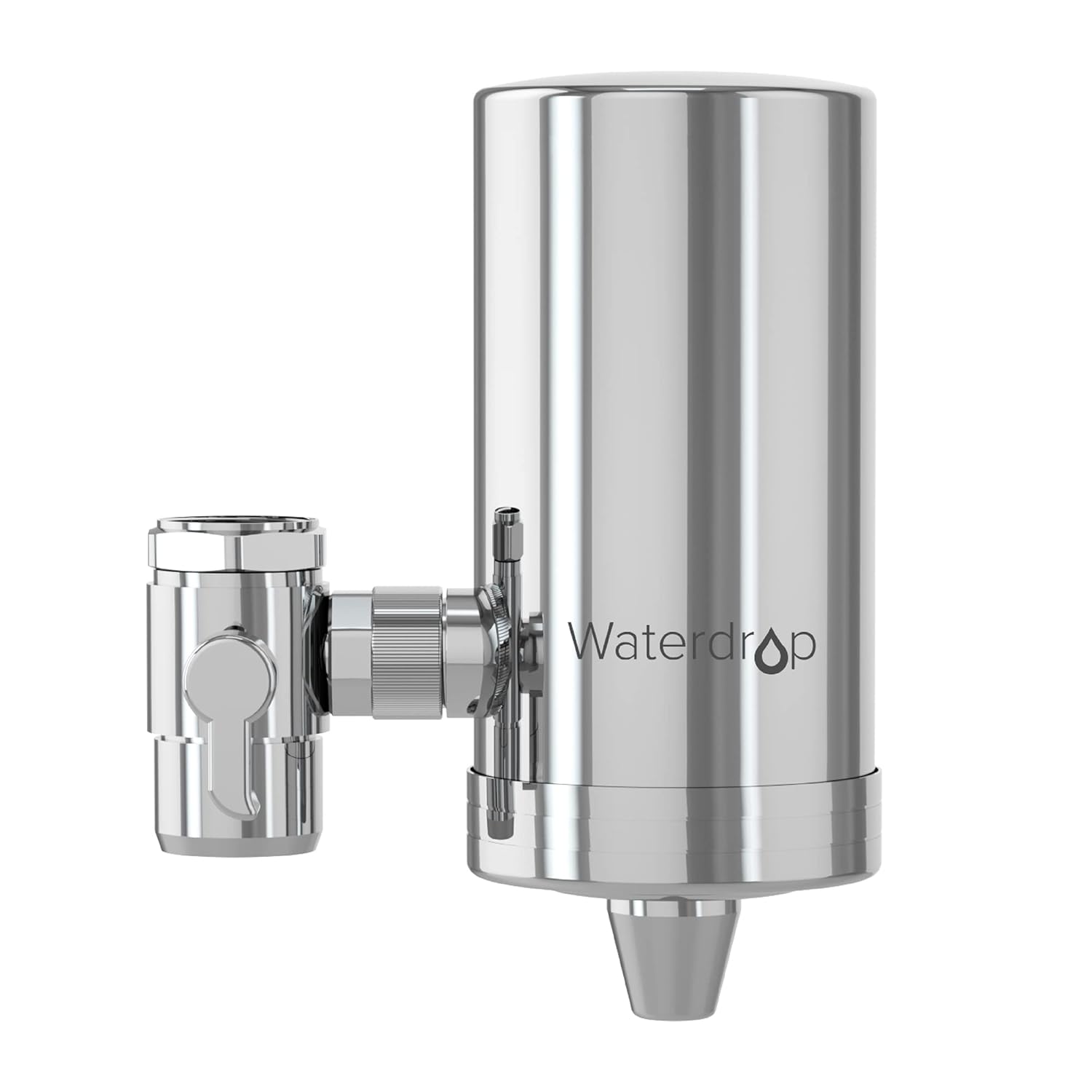
The Waterdrop WD-FC-06 takes a somewhat different approach from the compact plastic faucet-mounted systems commonly associated with this category.
It uses a stainless-steel housing with an activated-carbon-block filter and connects to a compatible faucet using the supplied adapters.
According to the manufacturer’s documentation, the WD-FC-06 has a rated capacity of up to 320 gallons or approximately three months, although actual filter life varies according to water quality and usage.
Why Consider It?
- Stainless-steel construction: The housing provides a different look and feel from many plastic faucet-mounted systems.
- Activated carbon block: Designed to address chlorine and other specified water-quality concerns.
- 320-gallon rated capacity: The manufacturer’s stated capacity is higher than several traditional faucet-mount alternatives.
- 0.5 GPM rated flow: Manufacturer specifications list a rated flow of approximately 0.5 gallons per minute.
- Replaceable cartridge: The system uses the WD-FF-03A replacement filter.
Potential drawback: Do not assume the WD-FC-06 has the same contaminant-reduction capabilities as PUR, Brita, or another faucet filter. Compare the exact certification and performance claims with the contaminants you want to address.
Buy Now: Check the Waterdrop WD-FC-06 on Amazon
4. Culligan FM-25 Faucet Mount Filter
Best for: Compact chrome design
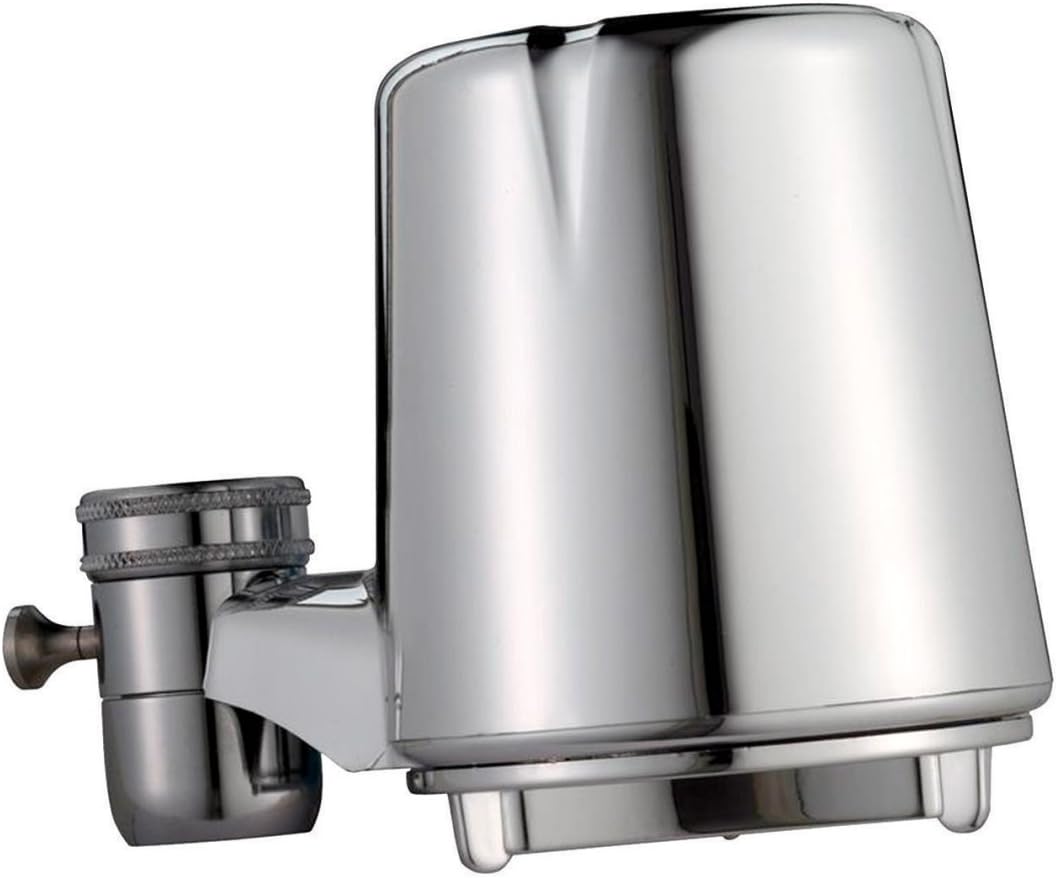
The Culligan FM-25 is a compact faucet-mounted system with a polished chrome appearance and a diverter that lets you switch between filtered and regular tap water.
Culligan lists reductions for chlorine taste and odor, lead, sediment, turbidity, atrazine, lindane, and nominal particulate Class I, among its specified performance claims.
Why Consider It?
- Compact design: Doesn’t require a separate tank or under-sink storage area.
- 200-gallon capacity: Culligan lists filter life at up to 200 gallons or approximately two months, depending on usage and water conditions.
- 0.5 GPM flow rate: Published specifications list a service flow of approximately 0.5 gallons per minute.
- Simple diverter: Lets you switch between filtered and unfiltered water.
- No-tools installation: Designed for straightforward installation on compatible faucets.
Potential drawback: The FM-25 is now listed by Culligan as a legacy model, so check current availability and replacement-filter availability before purchasing.
Buy Now: Check current Culligan FM-25 availability on Amazon
Which Is the Best Faucet Water Filter?
There isn’t one best faucet water filter for every household because the right system depends primarily on what is in your water and what you want the filter to reduce.
If verified contaminant-reduction claims are your priority, compare the performance data sheets for systems such as PUR and Brita against your specific concerns.
If construction and filter capacity matter more, the stainless-steel Waterdrop WD-FC-06 may be worth considering.
The Culligan FM-25 remains another compact option, although its legacy status makes long-term replacement-filter availability worth checking.
How to Choose the Best Faucet Water Filter for Your Home
1. Start With Your Water Quality
Don’t choose a filter based solely on the number of contaminants advertised on the package.
If you receive municipal water, review your utility’s Consumer Confidence Report or other water-quality information. If you’re concerned about contaminants introduced by household plumbing—such as lead—or you use a private well, appropriate water testing may provide more useful information.
Once you know what you’re trying to reduce, you can select filtration technology that addresses those specific concerns.
2. Look at Certification and Performance Data
Look for credible third-party certification and read the manufacturer’s performance data sheet.
Standards such as NSF/ANSI 42, 53, and 401 can relate to different categories of performance, but seeing an NSF standard number does not mean a filter removes every contaminant associated with that standard.
Check the individual contaminant-reduction claims for the exact filter cartridge and system.
3. Check Faucet Compatibility
This is one of the most common limitations of faucet-mounted filters.
Many systems fit conventional threaded faucets after the aerator is removed. Pull-down sprayers, handheld faucets, sensor faucets, and unusually shaped fixtures may not be compatible.
Check your faucet and the manufacturer’s compatibility requirements before ordering.
4. Compare Replacement-Filter Costs
The purchase price is only part of the cost of owning a faucet filter.
Consider:
- Replacement cartridge price
- Rated gallon capacity
- Recommended replacement interval
- Availability of replacement cartridges
- Your household’s filtered-water consumption
A more expensive system can sometimes cost less over time if its cartridges have a substantially higher useful capacity, but only if its filtration performance matches your needs.
5. Consider Flow Rate
Water moves through filtration media more slowly than it flows directly from an unrestricted faucet.
Compare rated flow rates if you frequently fill large bottles, coffee makers, cooking pots, or other containers.
6. Check the Filter-Change System
Some faucet filters include electronic indicators, while others rely on time or estimated gallon capacity.
A replacement indicator can be convenient, but it doesn’t eliminate the need to follow the manufacturer’s maintenance instructions.
What Can a Faucet Water Filter Remove?
This depends entirely on the filter.
Depending on its filtration media and certifications, a faucet filter may reduce some combination of:
- Chlorine taste and odor
- Lead
- Sediment and particulates
- Certain volatile organic compounds
- Certain pesticides or herbicides
- Other contaminants specifically listed in its performance data
Do not assume that a faucet filter removes bacteria, viruses, PFAS, fluoride, arsenic, nitrates, dissolved salts, or every other possible contaminant unless the manufacturer provides appropriate testing or certification for that claim.
Faucet Water Filters vs. Under-Sink Filters
A faucet-mounted system is generally easier and less expensive to install than an under-sink filtration system.
The tradeoff is capacity, flow, available filtration technology, and the physical unit attached to the faucet.
An under-sink system may be preferable when you want greater capacity, faster filtered-water flow, multiple filtration stages, or reverse osmosis.
If you’re considering that option, see our guide to affordable under-sink water filtration systems.
Faucet Filters vs. Countertop Water Filters
Countertop filtration systems offer another alternative when you don’t want to modify the plumbing beneath your sink.
Some connect directly to a faucet, while others use refillable reservoirs. Depending on the design, countertop systems may provide more filtration stages or capacity than a small faucet-mounted cartridge.
See our complete guide to countertop water filtration systems for more information.
Benefits of Faucet Water Filters
Convenient Filtered Water
Once installed, filtered water is available directly from the kitchen faucet without filling a pitcher and waiting for water to pass through it.
Simple Installation
Many faucet-mounted systems can be installed without permanent plumbing changes, provided the faucet is compatible.
Improved Taste and Odor
Filters certified for chlorine taste and odor reduction can improve the sensory quality of treated tap water.
Potential Alternative to Bottled Water
For households that buy bottled water primarily because they dislike the taste or odor of their tap water, an appropriate faucet filter may reduce reliance on single-use bottles.
Lower Upfront Cost
Faucet filters are generally less expensive to purchase than whole-house filtration or reverse osmosis equipment.
Limitations of Faucet Water Filters
Faucet-mounted filtration isn’t the right solution for every water problem.
Common limitations include:
- Compatibility issues with certain faucets
- Lower flow rates while filtering
- Limited cartridge capacity compared with larger systems
- A filtration unit attached directly to the faucet
- More frequent cartridge replacement
- Limited ability to address some dissolved contaminants
If your water has significant hardness, high dissolved solids, nitrate, arsenic, microbial contamination, or another specialized problem, you may need a different treatment technology.
Our guide to the best water filters for home explains the major filtration options and where each one fits.
Maintenance Tips for Faucet Water Filters
A faucet filter only performs as intended when it is properly maintained.
- Replace cartridges on schedule: Follow the manufacturer’s gallon capacity and replacement recommendations.
- Use cold water when required: Many faucet filters are designed specifically for cold-water filtration.
- Flush new cartridges: Follow the manufacturer’s flushing procedure after installing a replacement filter.
- Clean the exterior: Keep the housing and faucet connection clean according to the manufacturer’s instructions.
- Watch for reduced flow: A noticeable decline in filtered-water flow can indicate that the cartridge needs attention or replacement.
- Check for leaks: Inspect the faucet connection after installation and filter changes.
Frequently Asked Questions About Faucet Water Filters
Are faucet water filters worth it?
They can be. A faucet filter is particularly useful when you want convenient filtered drinking water without installing an under-sink system. Its value depends on whether the particular filter addresses your water-quality concerns.
Do faucet water filters remove lead?
Some do. PUR and Brita, for example, offer faucet filtration systems with certified lead-reduction claims. Do not assume every faucet filter reduces lead; verify the performance data for the exact model.
Do faucet filters remove bacteria?
Most common faucet-mounted drinking-water filters should not be assumed to make microbiologically unsafe water safe. PUR, Brita, Waterdrop, and Culligan all provide cautions concerning use with microbiologically unsafe or unknown-quality water without appropriate disinfection.
How often should I replace a faucet water filter?
There is no universal replacement interval. PUR recommends approximately three months for its faucet filters, Brita lists approximately four months or 100 gallons for its faucet system, Waterdrop lists three months or 320 gallons for the WD-FC-06, and Culligan lists up to two months or 200 gallons for the FM-25. Actual service life can vary with usage and water conditions.
Will a faucet water filter fit any faucet?
No. Most are designed for conventional faucets with removable aerators. Pull-down, handheld, sensor-operated, and specialty faucets frequently require a different filtration solution.
Can I run hot water through a faucet filter?
Follow the manufacturer’s instructions. Many faucet-mounted filtration cartridges are intended for cold water, and exposing them to water outside their specified temperature range can affect performance or damage the system.
Is a faucet filter better than a water-filter pitcher?
It depends on your priorities. Faucet filters provide filtered water on demand and may offer higher flow and capacity than a pitcher. Pitchers require no faucet compatibility and can be stored in a refrigerator. Compare contaminant-reduction performance rather than choosing solely by format.
Final Thoughts: Choosing the Best Faucet Water Filter
The best faucet water filter isn’t necessarily the one with the longest list of marketing claims. It’s the system whose verified filtration capabilities match the contaminants and water-quality issues you actually have.
PUR and Brita are strong places to start when certified contaminant-reduction performance and straightforward replacement cartridges are priorities. Waterdrop’s WD-FC-06 offers stainless-steel construction and a higher stated gallon capacity, while Culligan’s FM-25 remains a compact alternative if you can confirm current system and replacement-filter availability.
Before purchasing, check your faucet compatibility, review the exact performance data, calculate replacement-filter costs, and understand what the system does—and does not—remove.
If you’re still unsure which filtration technology is appropriate for your home, start with our complete guide to choosing a home water filter.