
We may earn money or products from the companies mentioned in this post.
An electronic water descaler can be an appealing option for homeowners who want to reduce hard-water scale without installing a traditional salt-based water softener. These systems are generally installed around or near the main water line and are designed to influence how hardness minerals behave as water moves through your plumbing.
Unlike traditional ion-exchange water softeners, electronic descalers do not remove calcium and magnesium from the water. That distinction is important. A descaler may help reduce scale accumulation under the right conditions, but it does not produce genuinely softened water.
In this guide, we’ll compare several popular electronic water descalers, explain how the technology works, discuss its limitations, and help you decide whether a descaler or traditional water softener makes more sense for your home.
Best Electronic Water Descalers: Our Top Picks
1. Eddy Electronic Water Descaler
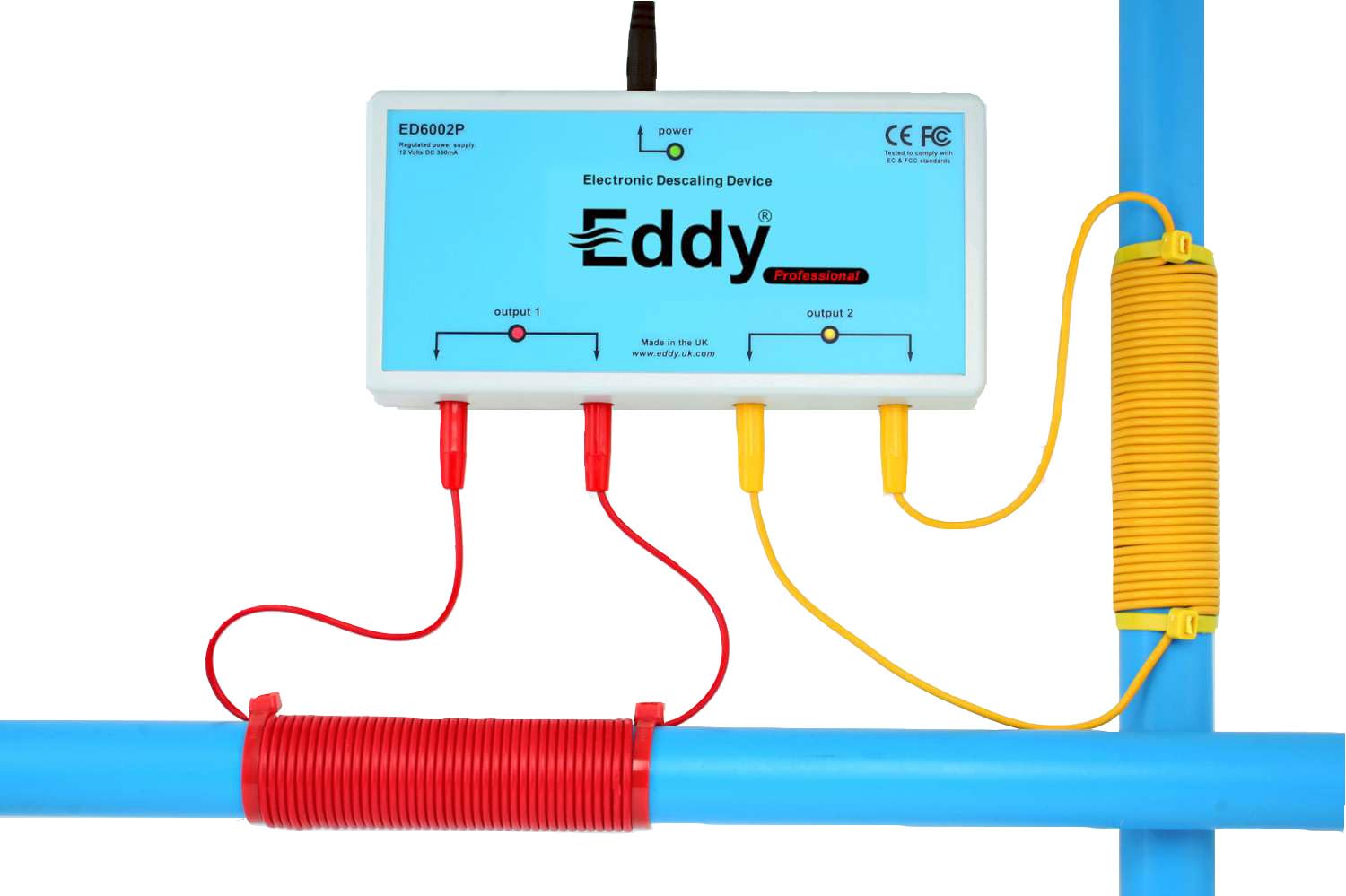
The Eddy Electronic Water Descaler is designed as a non-salt alternative for homeowners primarily concerned about scale buildup. The system uses coils wrapped around the incoming water pipe and an electronic control unit to generate an electromagnetic field.
One advantage is that installation doesn’t normally require cutting into the plumbing. This makes the Eddy appealing to homeowners looking for a relatively straightforward DIY system.
Pros:
- DIY-friendly installation
- No salt or chemical additives
- No filter cartridges to replace
- Designed for use with different plumbing materials
- Low ongoing maintenance
Cons:
- Does not remove calcium or magnesium from the water
- Results can vary according to water chemistry and plumbing conditions
- Not a replacement for a true water softener when actual hardness reduction is required
Buy Now: See prices on Amazon
2. Yarna Capacitive Electronic Water Descaler
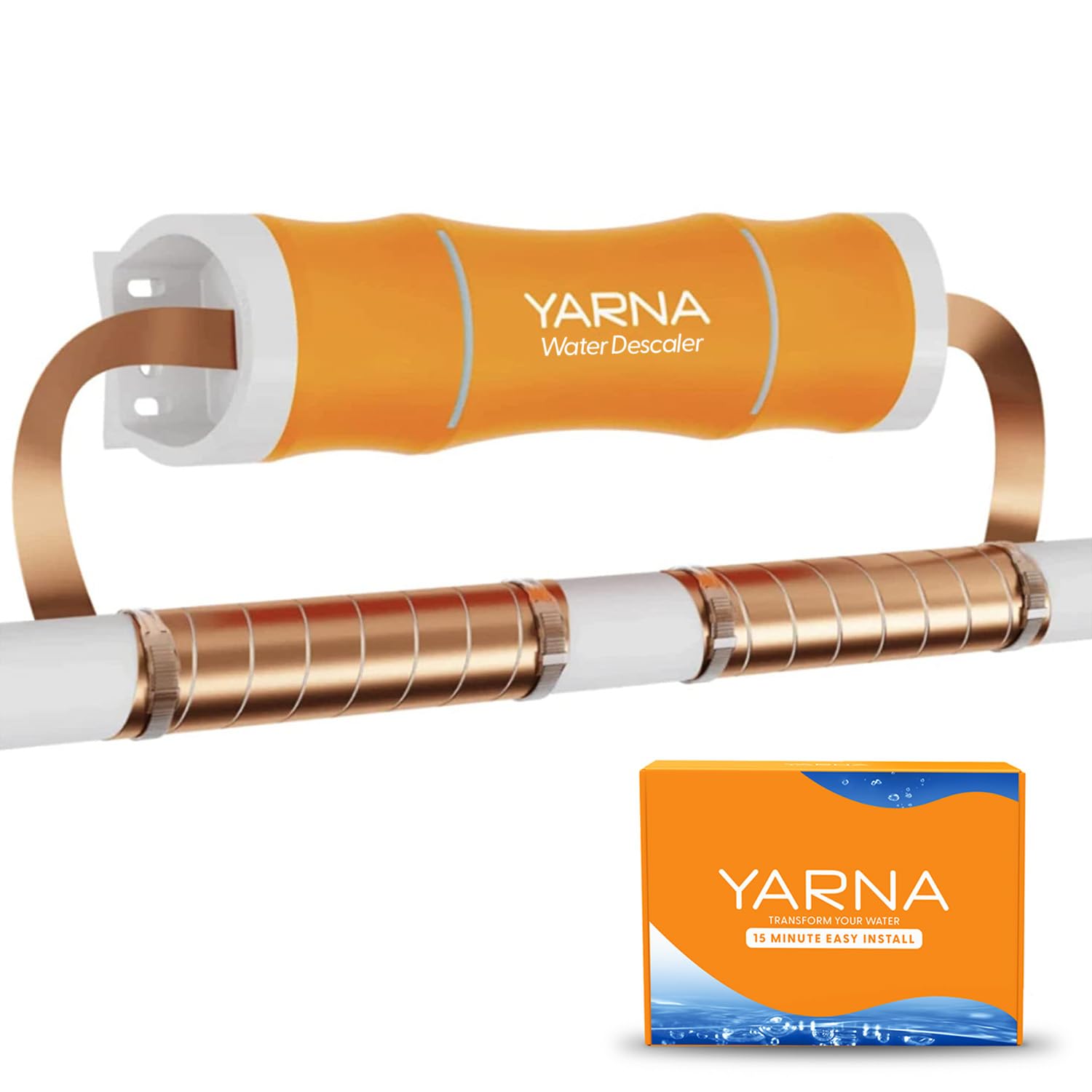
The Yarna Capacitive Electronic Water Descaler uses capacitive technology rather than relying on a traditional permanent magnet. The system wraps around the outside of the incoming water pipe, allowing installation without cutting the pipe or adding a treatment tank.
Like other electronic conditioning systems, Yarna should be viewed as a scale-control device rather than a conventional water softener. Calcium and magnesium remain in the water after treatment.
Pros:
- No salt required
- No plumbing modifications for typical installations
- Does not require filter replacements
- Designed for multiple common pipe materials
- Low-maintenance operation
Cons:
- More expensive than some entry-level electronic descalers
- Does not actually soften the water
- Performance may vary depending on water chemistry, hardness and installation conditions
Buy Now: See this product on Amazon
3. Scalewatcher 3 Star Electronic Descaler
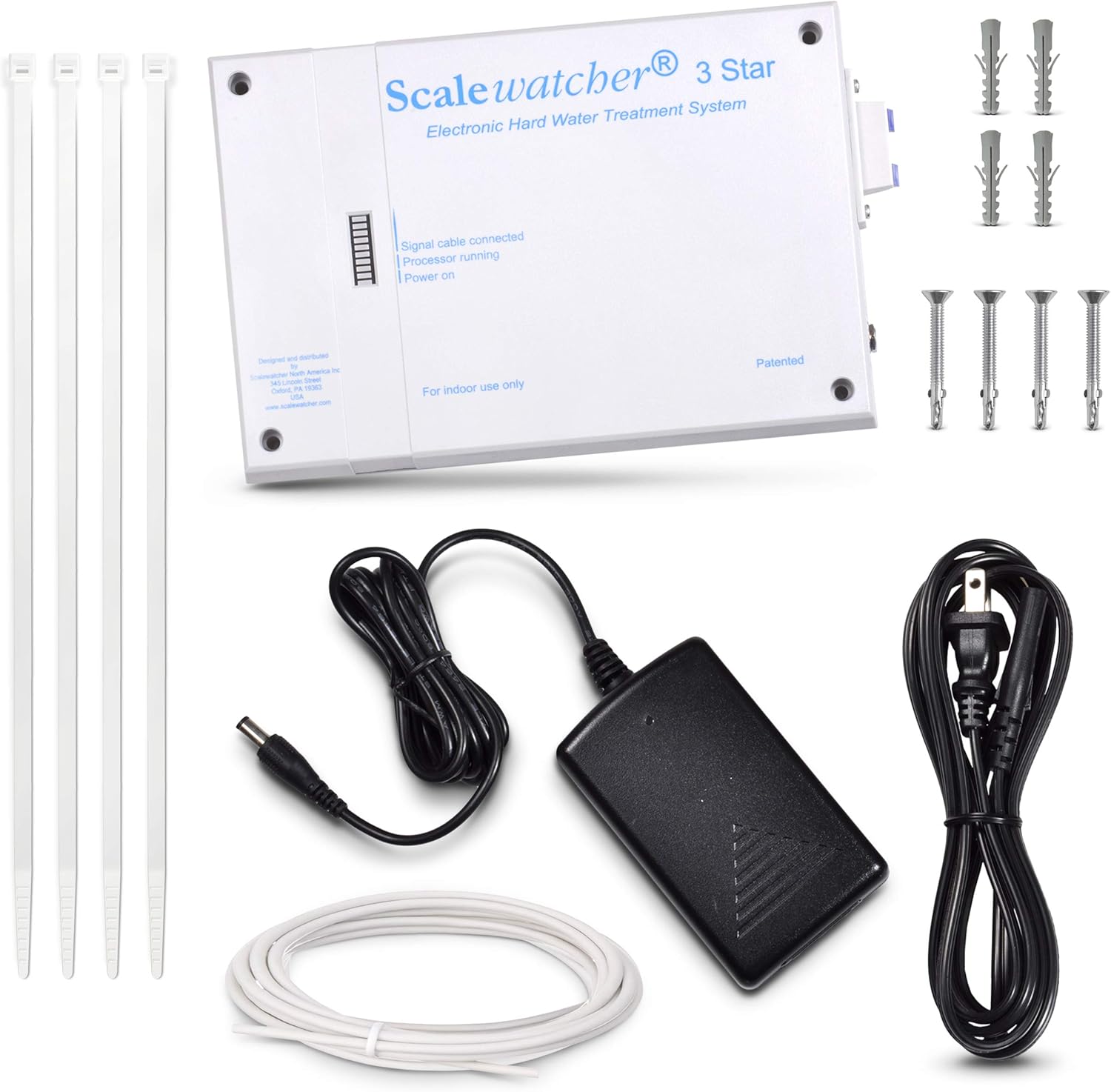
The Scalewatcher 3 Star is another electronic scale-control system designed for residential plumbing. It uses an electronic signal applied through coils around the pipe rather than physically removing hardness minerals from the water.
This type of system may appeal to homeowners who want whole-house scale control without salt, regeneration cycles or major plumbing modifications.
Pros:
- Salt-free operation
- No wastewater from regeneration
- No replacement filter cartridges
- Designed for whole-house scale control
- Can be installed without adding a conventional softener tank
Cons:
- Typically more expensive than basic electronic descalers
- Does not remove hardness minerals
- Performance can depend on water conditions and proper installation
Buy Now: See prices on Amazon
4. HydroFLOW Pearl
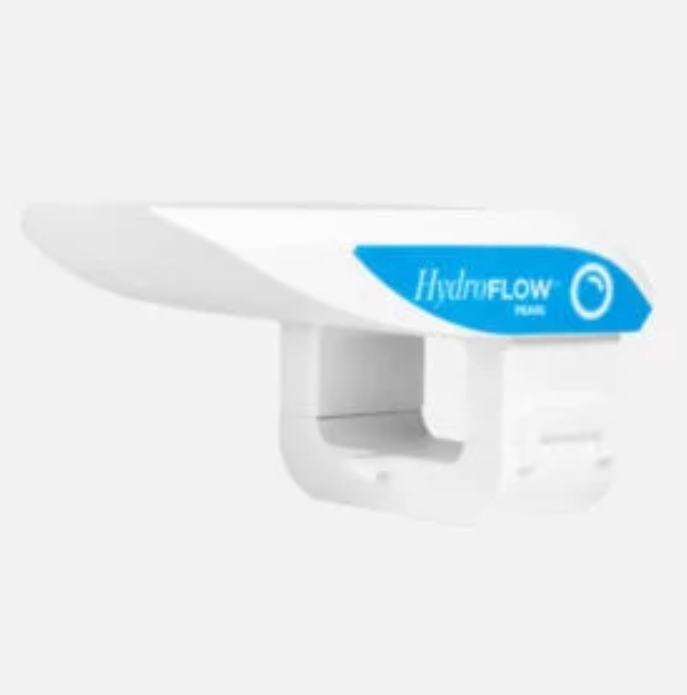
The HydroFLOW Pearl takes a somewhat different approach to electronic water conditioning. It is designed to fit around the outside of a pipe and provide scale-control treatment without adding salt or physically removing hardness minerals.
Because the Pearl doesn’t operate like an ion-exchange softener, homeowners should not expect hardness test results to drop after installation. Its purpose is scale management rather than mineral removal.
Pros:
- No salt or chemical additives
- No regeneration wastewater
- No filter cartridges to replace
- External installation avoids major plumbing modifications
- Designed for ongoing scale-control treatment
Cons:
- Higher upfront price than many basic descalers
- Does not soften water by removing hardness minerals
- Results may depend on water chemistry and installation conditions
Buy Now: See price on Amazon
5. iSpring ED2000 Whole House Water Descaler
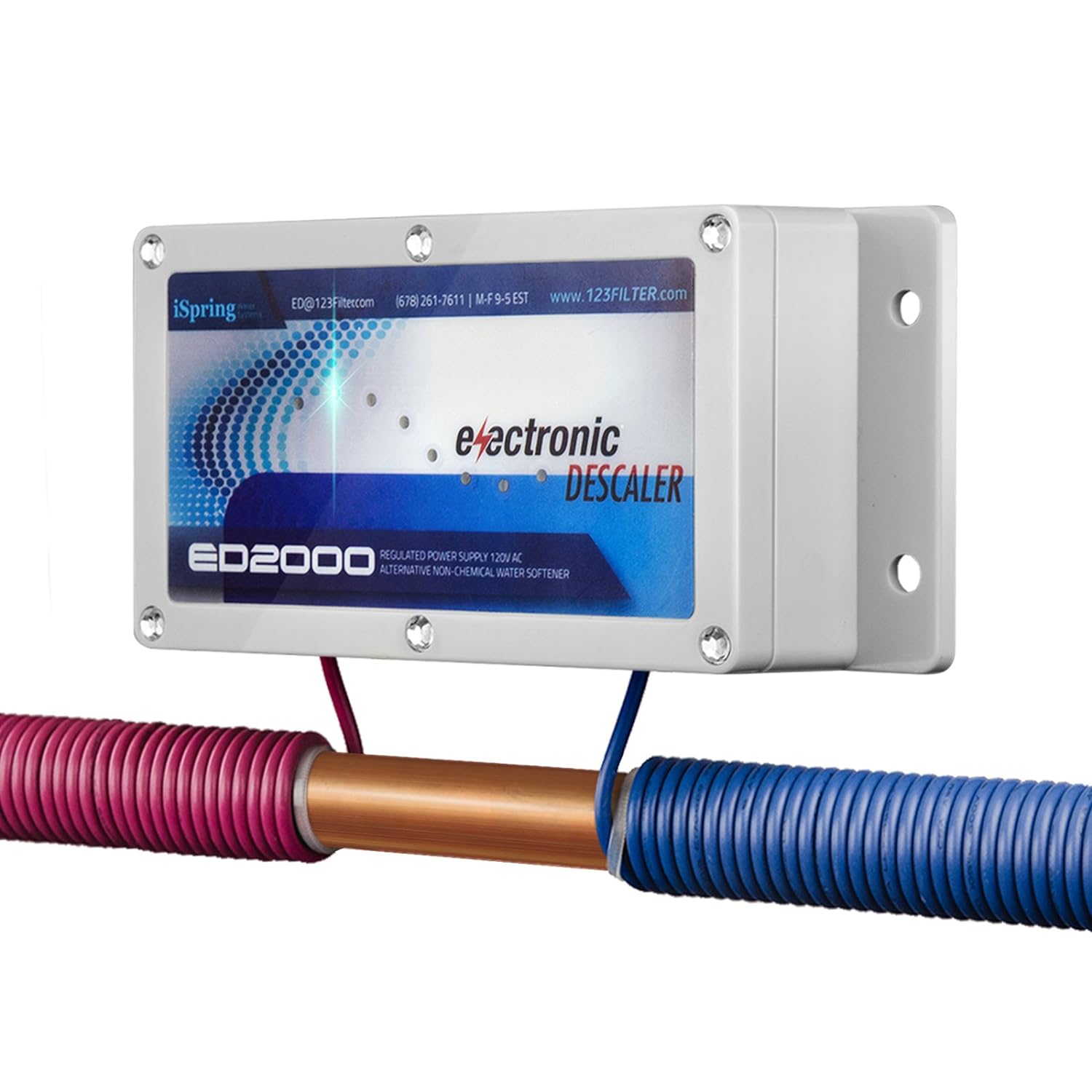
The iSpring ED2000 is a whole-house electronic water descaler designed to help control scale without salt or chemical additives. Coils wrap around the main water pipe, allowing the unit to operate without cutting into the plumbing during a typical installation.
The ED2000 is best considered a scale-control system rather than a water softener. Hardness minerals remain in the water, so homeowners dealing with severe hardness or applications requiring truly softened water may still need conventional ion-exchange treatment.
Pros:
- No salt or chemical additives
- No filter replacements
- No softener regeneration cycle
- Relatively simple installation
- Minimal routine maintenance
Cons:
- Does not remove calcium and magnesium
- Requires electricity to operate
- Performance may vary with water chemistry and plumbing conditions
Buy Now: See prices on Amazon
How Does an Electronic Water Descaler Work?
An electronic water descaler typically uses coils or another external component installed around a water pipe. The system generates an electromagnetic or electrical signal intended to influence the behavior of dissolved hardness minerals such as calcium and magnesium.
The goal is not to remove these minerals. Instead, manufacturers design these systems to reduce the tendency of hardness minerals to form stubborn scale deposits on plumbing fixtures, heating elements and other surfaces.
This is fundamentally different from ion-exchange water softening.
A traditional water softener removes calcium and magnesium ions from the water and exchanges them for other ions, typically sodium or potassium. Because an electronic descaler leaves the hardness minerals in place, a standard hardness test may show essentially the same hardness level before and after treatment.
Electronic Water Descaler vs. Magnetic Descaler
The terms magnetic descaler, electronic descaler and electronic water conditioner are sometimes used interchangeably, but the technologies are not necessarily identical.
A basic magnetic descaler may use permanent magnets attached around a pipe and require no electrical connection. Electronic and capacitive systems use powered components, coils or electrical signals to condition the water as it passes through the plumbing.
Because products differ considerably in design, it’s better to evaluate the technology and specifications of an individual system rather than assuming every “magnetic” or “electronic” descaler works the same way.
Electronic Water Descaler vs. Water Softener
This is one of the most important distinctions to understand before buying a descaler.
An electronic water descaler does not soften water in the traditional sense.
A salt-based ion-exchange softener physically reduces the concentration of calcium and magnesium responsible for water hardness. A descaler attempts to reduce the problems associated with mineral scale while allowing those minerals to remain in the water.
A traditional water softener may therefore be the better choice if your primary goal is to:
- Reduce measurable water hardness
- Improve soap and detergent performance
- Address severe mineral spotting
- Produce genuinely softened water throughout the home
An electronic descaler may be more appealing if your main concern is scale buildup and you want to avoid salt, regeneration cycles and a large softener tank.
If you’re still determining what treatment your home needs, see our guide on how to choose a water filter for hard water.
Benefits of an Electronic Water Descaler
No Salt Required
Electronic descalers don’t require bags of softener salt. That eliminates salt refills and can make routine ownership easier for homeowners who don’t want to maintain a conventional softening system.
No Regeneration Wastewater
Traditional ion-exchange softeners periodically regenerate their resin bed, producing wastewater during the process. Electronic descalers don’t use this type of regeneration cycle.
Minimal Maintenance
Most electronic systems have no filter cartridges, resin tanks or salt reservoirs. Once properly installed, routine maintenance is generally limited.
Compact Installation
Many models mount directly around the existing water pipe. This can make them useful in homes where there isn’t enough space for a traditional water softener and brine tank.
Hardness Minerals Remain in the Water
Because descalers do not remove calcium and magnesium, the mineral composition of the water is not altered in the same way it is with ion-exchange softening.
Limitations of Electronic Water Descalers
Electronic water descalers have several important limitations that should be considered before purchasing one.
They Don’t Actually Soften Water
This is the biggest limitation. If you test your water hardness before and after installing a descaler, you should not expect the hardness concentration to disappear simply because the system is operating.
Performance Can Vary
Results can depend on factors including water chemistry, mineral concentration, temperature, flow rate, plumbing configuration and the technology used by the individual device.
Evidence Is Mixed
Physical water-conditioning technologies, including magnetic and electronic approaches, have been studied for scale control, but results have not been universally consistent across systems and operating conditions.
For that reason, homeowners should be cautious of products promising guaranteed elimination of hard-water problems or claiming to provide exactly the same results as an ion-exchange water softener.
Very Hard Water May Require a Different Solution
If your home has severe hard-water problems, an electronic descaler may not provide the results you’re looking for. Testing your water first can help determine whether scale control is sufficient or whether actual hardness reduction would be more appropriate.
How to Choose the Best Electronic Water Descaler
1. Test Your Water Hardness
Start by determining how hard your water actually is. A home test kit or laboratory water analysis can give you a clearer picture of the calcium and magnesium levels you’re dealing with.
2. Check Pipe Compatibility
Confirm that the manufacturer supports your pipe material and pipe diameter. Homes may use copper, PVC, PEX, galvanized steel or combinations of different materials.
3. Check Installation Requirements
Some electronic water descalers are designed for straightforward DIY installation, while others may have more specific requirements regarding coil placement, available pipe length or proximity to an electrical outlet.
4. Understand What the Product Claims to Do
Look carefully at the manufacturer’s claims. A descaler designed to reduce scale formation should not automatically be interpreted as a system that removes hardness minerals or produces soft water.
5. Compare Warranty and Return Policies
Because performance can vary from one household to another, warranty coverage and return policies can be particularly important when buying an electronic descaler.
6. Consider Your Entire Water Treatment Setup
Scale isn’t the only potential water-quality issue. Electronic descalers aren’t designed to remove contaminants such as chlorine, lead, sediment or many other substances that conventional filtration systems may target.
For a broader look at treatment options, our best water filters for home guide explains how different filtration technologies address different water-quality concerns.
Does an Electronic Water Descaler Remove Contaminants?
No. An electronic water descaler should not be confused with a drinking-water filter.
Descaling systems are intended primarily for scale management. They generally do not function as conventional filters for sediment, chlorine, lead, microorganisms or other contaminants.
If drinking-water quality is your main concern, you may need a dedicated filtration system instead. Depending on your needs, options can include under-sink water filtration systems or countertop water filtration systems.
Are Electronic Water Descalers Worth It?
An electronic water descaler may be worth considering if you’re primarily concerned about scale, want a compact system and prefer to avoid salt-based treatment.
They’re especially attractive to homeowners who value low maintenance and don’t need their hardness minerals physically removed.
However, expectations matter. A descaler isn’t simply a smaller or maintenance-free version of a water softener. The two technologies address hard water differently.
If your goal is measurable hardness reduction, traditional ion exchange remains the more direct treatment approach. If your goal is primarily reducing scale accumulation without salt, an electronic descaler may be worth evaluating.
Frequently Asked Questions
Do electronic water descalers actually soften water?
No. Electronic water descalers don’t normally remove the calcium and magnesium responsible for water hardness. They are intended to help manage scale rather than produce genuinely softened water.
Will an electronic water descaler lower my water hardness reading?
Generally, no. Because the hardness minerals remain in the water, a conventional hardness test may produce similar results before and after treatment.
Do electronic descalers need salt?
No. Electronic descalers typically operate without softener salt, resin regeneration or a brine tank.
Does an electronic water descaler filter drinking water?
No. Descaling and filtration are different forms of water treatment. A descaler isn’t designed to replace a drinking-water filtration system.
Can an electronic descaler remove existing scale?
Some manufacturers claim their systems can gradually help with existing scale deposits, but results can depend heavily on the product, water chemistry and plumbing conditions. It is safer to view these systems primarily as scale-management devices rather than guaranteed scale-removal systems.
Is an electronic descaler better than a water softener?
Neither option is automatically better. They serve different purposes. A traditional softener removes hardness minerals, while an electronic descaler attempts to manage scale without removing those minerals. The better choice depends on your water conditions and what you’re trying to accomplish.
Final Thoughts
The best electronic water descaler for your home depends on your water hardness, plumbing, budget and expectations. Eddy, Yarna, Scalewatcher, HydroFLOW and iSpring all offer approaches to salt-free scale management, but none should automatically be treated as a direct replacement for conventional water softening.
Before buying, test your water and determine whether your primary problem is scale accumulation, excessive hardness or another water-quality concern entirely.
If scale control without salt is your priority, an electronic water descaler may be worth considering. If you need actual hardness reduction, compare the system carefully with a traditional ion-exchange water softener before making your decision.